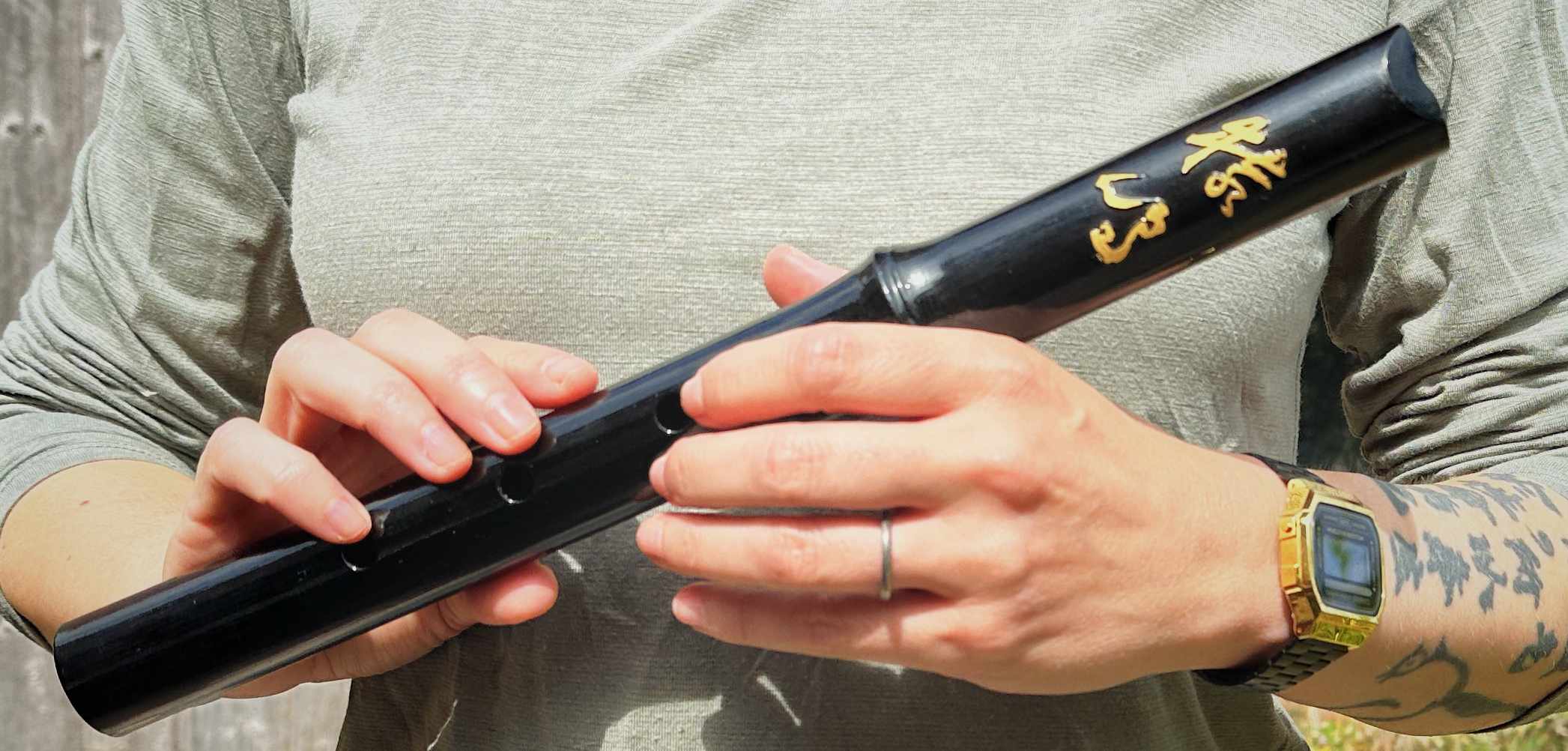

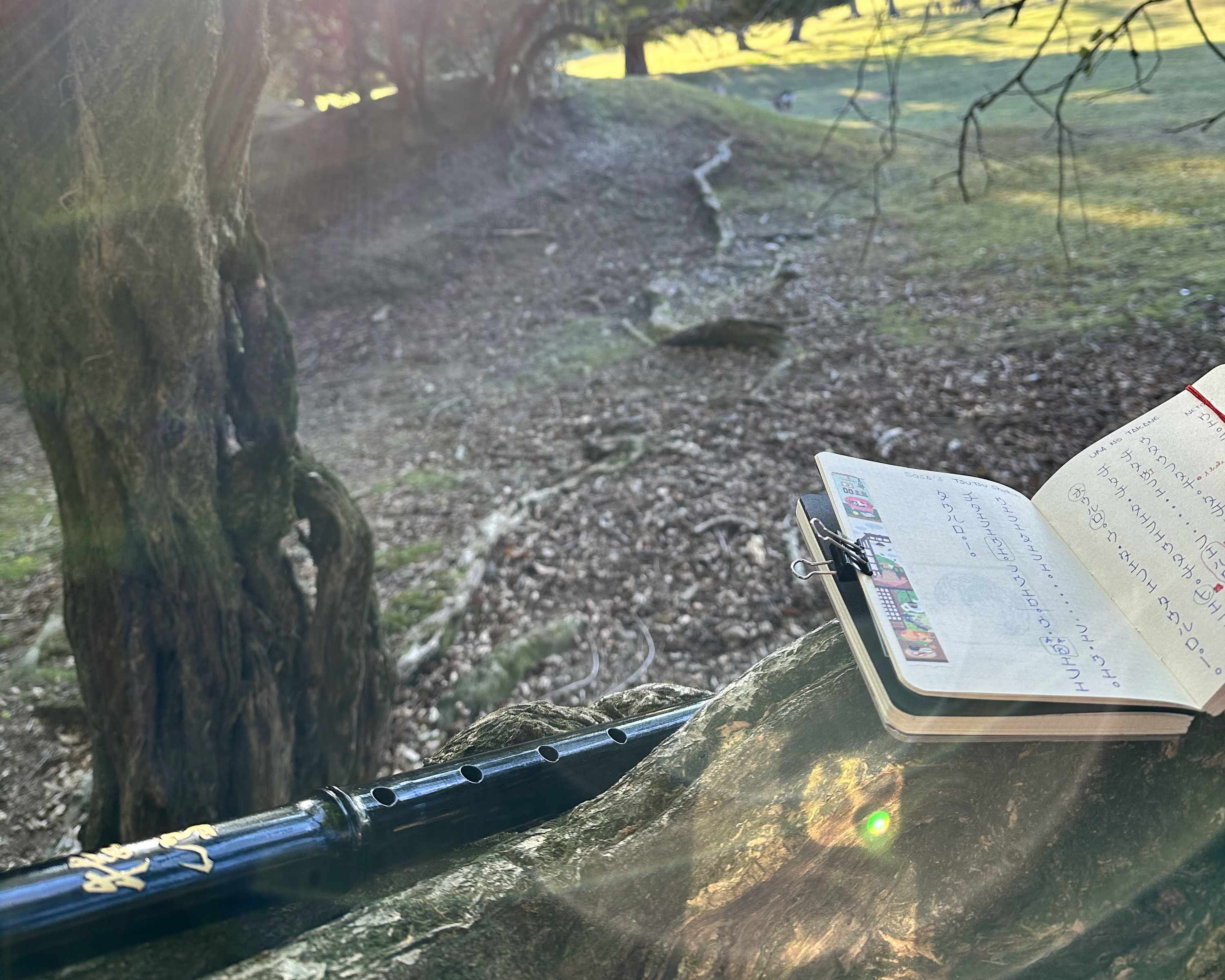
Once, in the olden days of Japan, there was a flute of rare enchantment. It was fashioned from a length of bamboo bearing one single node, and pierced with five holes — four above, one below. People called it a “hitoyogiri”, and poets and samurai alike delighted in the sound of its voice.
A short definition
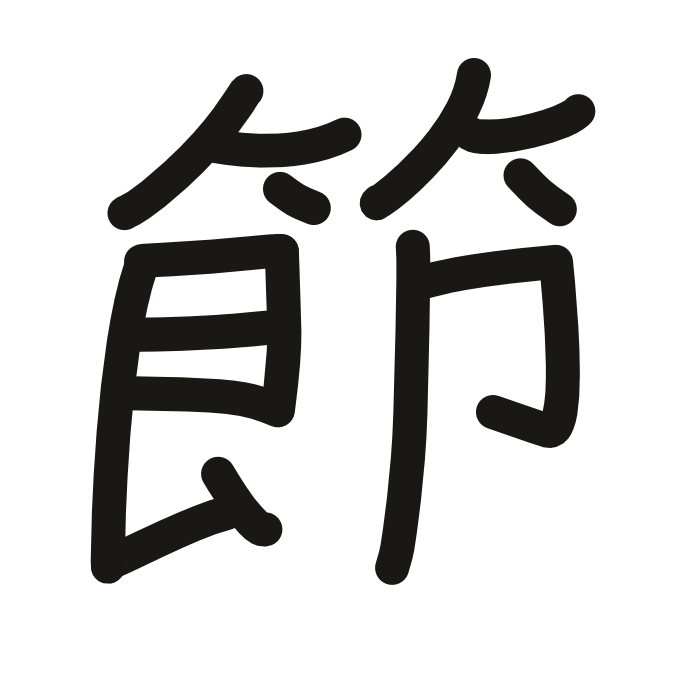
The hitoyogiri (一節切, literally “one node cut”) is an end-blown bamboo flute that flourished in Japan during the Muromachi and early Edo periods.
It exists in five lengths, each corresponding to a mode and a season: spring, summer, autumn, winter, and doyo, the interseason.
To play the hitoyogiri is to tune in with earthly cycles.
Where shakuhachi players learn on a 1.8 instrument, hitoyogiri players begin with the Oshiki — the summer flute, smaller and higher-pitched than its shakuhachi counterpart. Its tone is clear and pure — gentle, ethereal, flickering with subtle inflections.
尺八はひと夜ばかりと思ひしに 幾夜か老の友となりけむ
“I thought the shakuhachi would be only a companion for one night, and yet through how many nights has it become the friend of my old age?”
— Attributed to Ikkyū Sōjun (一休宗純, 1394–1481), Muromachi period; traditional attribution
The "shakuhachi" of Ikkyu's time was almost certainly the hitoyogiri — the instrument now known as shakuhachi did not yet exist.
Today, the hitoyogiri is extremely rare. Only a small number of players keep the tradition alive, making any encounter with its sound a genuinely unusual experience.
Origins & legacy
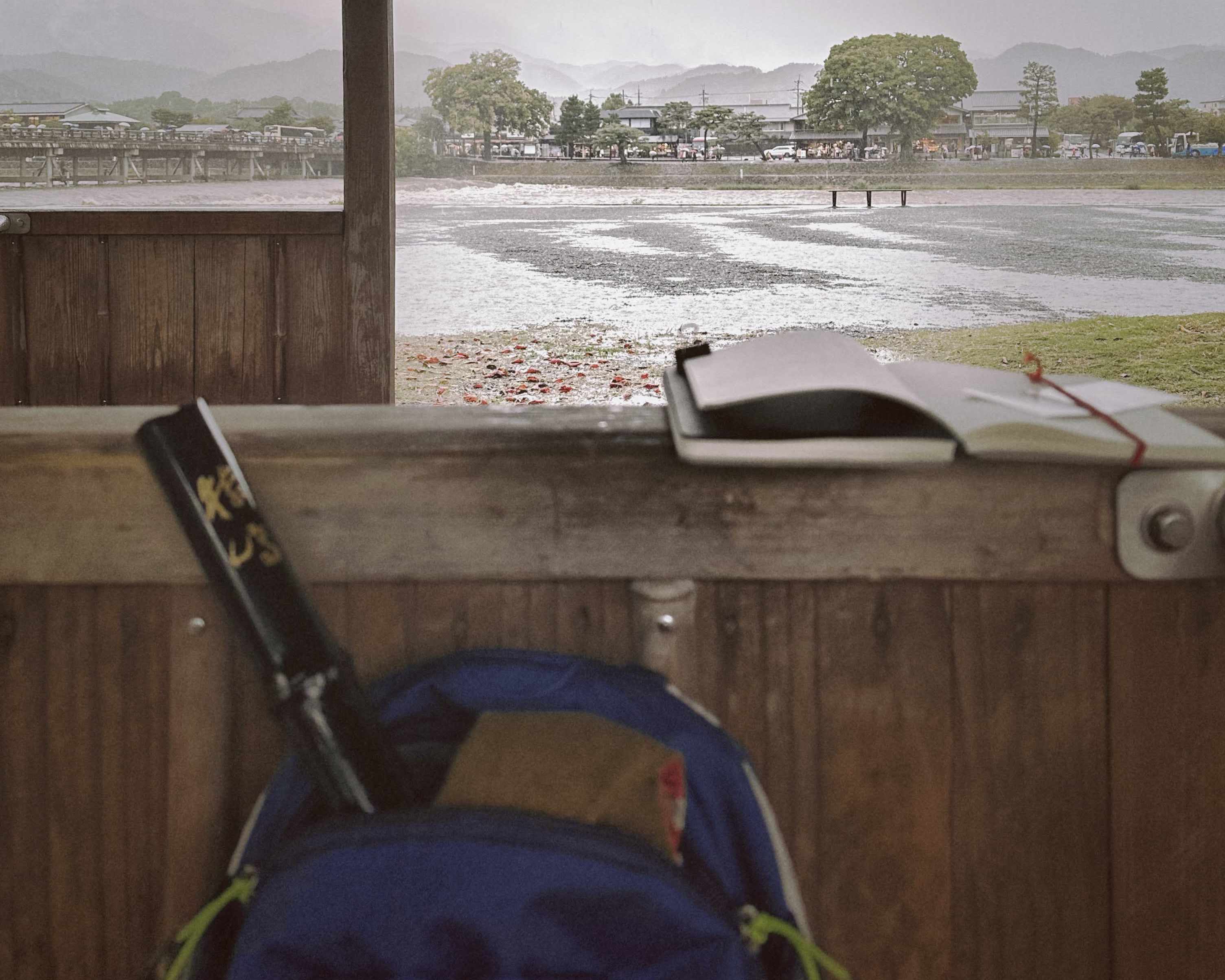
The hitoyogiri took shape in Japan during the Muromachi period (1336–1573), a time of intense cultural experimentation, when Buddhist aesthetics, poetry, and chanoyu (the Japanese tea ceremony) were reshaping artistic life. Its home was the cultivated circles — monks, poets, courtiers, literati, and samurai — but it also moved through more performative contexts, accompanying kouta (short lyric songs) and threading through the musical life surrounding Noh and kyōgen (a traditional comic theatre performed alongside Noh).
Muromachi period · 14th–16th c.
The hitoyogiri takes root in Japan’s cultivated circles — transmitted by ear, varying by place, with no fixed written tradition to anchor it. It moves through the same world as Buddhism, poetry, and tea. Ikkyu himself writes poems about the instrument, calling it by its old name: shakuhachi.
Early Edo period · 17th c.
With Ōmori Sōkun, the tradition finds its written form: fingering systems, notation, and the solo te pieces that would become the heart of the repertoire. The instrument is said to have been played by tea master Kobori Enshū and the shogun Tokugawa Ieyasu; Emperor Go-Yōzei orders several flutes from Sōkun. A few of his instruments survived to this day, they are held in collections in New York and Nagoya.
Mid Edo period · 18th c.
The shakuhachi — louder, wider in range, and capable of playing the miyakobushi scale that was coming to define the period’s musical taste — gradually draws the audience away. The hitoyogiri does not disappear, but it retreats, surviving in small specialist circles as the world it belonged to slowly recedes around it.
20th–21st century
Revival efforts, including those of Kamiya Juntei, recover important knowledge and keep the thread from breaking entirely. Modern hitoyogiri playing is largely an act of reconstruction — but the written material that survives is rich enough to give a genuine sense of how the music once sounded. The instrument is being played again.
Sounds and seasons
The hitoyogiri speaks in a gentle, clear voice, with a tone some have likened to birdsong. It flows with the seasons, while its pulse follows the movements of yin-yang.
Performance by Nick Bellando
Diaries of a forgotten flute
Going Further
Written and recorded resources for the hitoyogiri remain sparse across all languages. These videos are a starting point from our corner of the practice — other voices and traditions exist beyond this page.
Learn about hitoyogiri
Learn about Omori Sokun